 Most viewed Most viewed |

10_ways_of_making_merit.pdfTen Ways of Making Merit5114 viewsThe Buddha taught that merit-making is a formidable antidote to overcome the many vicissitudes faced in our day-to-day lives. Hence He declared: ‘Do not fear merit-making. “Merit-making†is a term denoting happiness, what is desirable, pleasant, dear and charming. For I recall in my mind very well that after making merit for a long time, I experienced desirable, pleasant, dear and charming results for a long time. Let therefore a man train himself in merit-making that yields long-lasting happiness. Let him cultivate the practice of giving, virtuous conduct and a mind of metta. By cultivating these qualities the wise man arrives in untroubled and happy states.
|
|

pictograph02.jpgPictograph025113 viewsTibetan Buddhist Art Work: Pictograph02
|
|
bud-myanmar.pdfBuddhism in Myanmar - A Short History5083 viewsThis book traces the earliest contact with Buddhism in Mayanmar (Burma); the Mon and Pyu Kingdoms. Theravada Buddhism comes to Pagan; Pagan: its flowering and decline. The Shan rule. The Mayanmar build an Empire. The Eighteenth and Nineteenth Centuries.
|
|
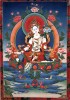
02_tara.jpgThe 21 Taras (02)5082 viewsThe 21 Taras [Tibetan style] (Tibetan, Sgrol-ma)
It was not until the adoption of the Yogachara system, taught by Asanga in the fourth century AD, that the feminine principle began to be venerated in Mahayana Buddhism. Around the sixth century, the goddess Tara was considered as a Sakti of Avalokitesvara (sometimes as his wife).
|
|
ritual-drum.jpgRitual Drum5076 viewsTibetan Buddhist Art Work: Ritual Drum
|
|
path-free.pdfOn The Path To Freedom5075 viewsOn The Path to Freedom - a mind of wise discernment and openness - by Burmese Meditation Master, Sayadaw U Pandita. This is a compilation of Dhamma discourses to foreign meditators at the Mahasi Meditation Centre, Rangoon, Myanmar, who came to practise under him in Yangon (formerly Rangoon) between August 1986 to March 1987. Translated from Myanmar by the late Mya Thaung.
|
|
mindocean.pdfMake Your Mind an Ocean5069 viewsTo enter the spiritual path, you must begin to understand your own mental attitude and how your mind perceives things. If you're all caught up in attachment to tiny atoms, your limited, craving mind will make it impossible for you to enjoy life's pleasures. External energy is so incredibly limited that if you allow yourself to be bound by it, your mind itself will become just as limited. When your mind is narrow, small things easily agitate you. In this series of lectures, Lama speaks on the nature of mind and the Buddhist approach to mental health. Of particular interest here is 'A Buddhist Approach to Mental Illness', a talk Lama gave to a group of Western mental health practitioners, and which highlights the differences between the two approaches to mental health and perhaps lays the foundation for a greater understanding between the two.
|
|

pictograph03.jpgPictograph035051 viewsTibetan Buddhist Art Work: Pictograph03
|
|
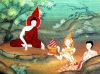
buddha_life_11.jpgThe Meal Before Enlightenment5047 viewsThe Meal Before Enlightenment
|
|
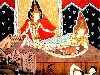
buddha_life_06.gifThe Great Renunciation5033 viewsThe Great Renunciation
|
|
| 1212 files on 122 page(s) |
 |
|
|
15 | |
|
|
|






















 Social Bookmarks


