 Most viewed Most viewed |

Whitge-Lotus-Ascetic1-106.pdfThe White Lotus Ascetic (Text)3027 viewsAbout fifty years ago, the late Venerable Mahasi Sayadaw of Myanmar introduced the technique of focusing one’s attention on the ‘rising and falling’ movement of the abdomen as an object to develop mindfulness. Thus meditators practise Satipatthana developing momentary concentration to achieve purification of mind, without the need to develop mundane jhana. Satipatthana Vipassana meditation became very popular among monks as well as the laity and many new Vipassana meditation centers sprang up all over the world to cater to the growing demand.
|
|
01lotus-bud1.jpgLotus bud 013024 viewsLotus bud 01
|
|
06_satipatthana_sutta_02.pdf02 Satipatthana Sutta3020 viewsDuring this course we have looked at how different interpretative communities read the Nikayas. Among these are contemporary communities formed by the experience of modernity, practitioners who are attempting to apply the teachings found in the Nikayas to their daily lives in the contemporary world. Locating ourselves within such a community, we can see that our reading is a form of practitioner criticism. We have sought to make sense of this alien literature firstly by acknowledging that it is not a literature at all, but a collection of oral performances. We have examined how these performances are both made up of and linked by patterns of repetition lists of lists within lists. The lists function like tables in individual databases, and the teaching as a whole - the dhamma - functions as a relational database which exists, not within any given sutta, but as a network of relationships which underlies and unites all the suttas.
|
|

MatthieuRicard_2004-480p.mp4Habits of Happiness3018 viewsWhat is happiness, and how can we all get some? Biochemist turned Buddhist monk Matthieu Ricard says we can train our minds in habits of well-being, to generate a true sense of serenity and fulfilment.
NB: A large file, you'll need a high speed connection to play it.
|
|
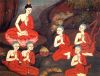
buddha_life_29.jpgThe Buddha's Last Sickness3016 viewsThe Buddha's Last Sickness
|
|

Amithaba008.jpgAmithabha Buddha083007 viewsAMITABHA: Buddha of Boundless Light of the Western Paradise
|
|

08_tara.jpgThe 21 Taras (08)3003 viewsThe 21 Taras [Tibetan style] (Tibetan, Sgrol-ma)
It was not until the adoption of the Yogachara system, taught by Asanga in the fourth century AD, that the feminine principle began to be venerated in Mahayana Buddhism. Around the sixth century, the goddess Tara was considered as a Sakti of Avalokitesvara (sometimes as his wife).
|
|

12white-heart-lotus.jpgLotus Heart3002 viewsLotus Heart
|
|
upanisa_sutta.pdfTranscendental Dependent Arising3001 viewsBhikkhu Bodhi
Dependent Arising (paticcasamuppada) is the central principle of the Buddha's teaching, constituting both the objective content of its liberating insight and the germinative source for its vast network of doctrines and disciplines. So crucial is this principle to the body of the Buddha's doctrine that an insight into dependent arising is held to be sufficient to yield an understanding of the entire teaching. In the words of the Buddha: He who sees dependent arising sees the Dhamma; he who sees the Dhamma sees dependent arising.
|
|
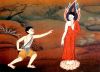
buddha_life_25.jpgThe Conversion of Angulimala2997 viewsThe Conversion of Angulimala
|
|
| 1212 files on 122 page(s) |
 |
|
|
37 | |
|
|
|























 Social Bookmarks


